Clinical lead: Dr Irshad Baurhoo, GDC 115147. Updated 26 October 2026.
Who it suits
Do I need a night guard?
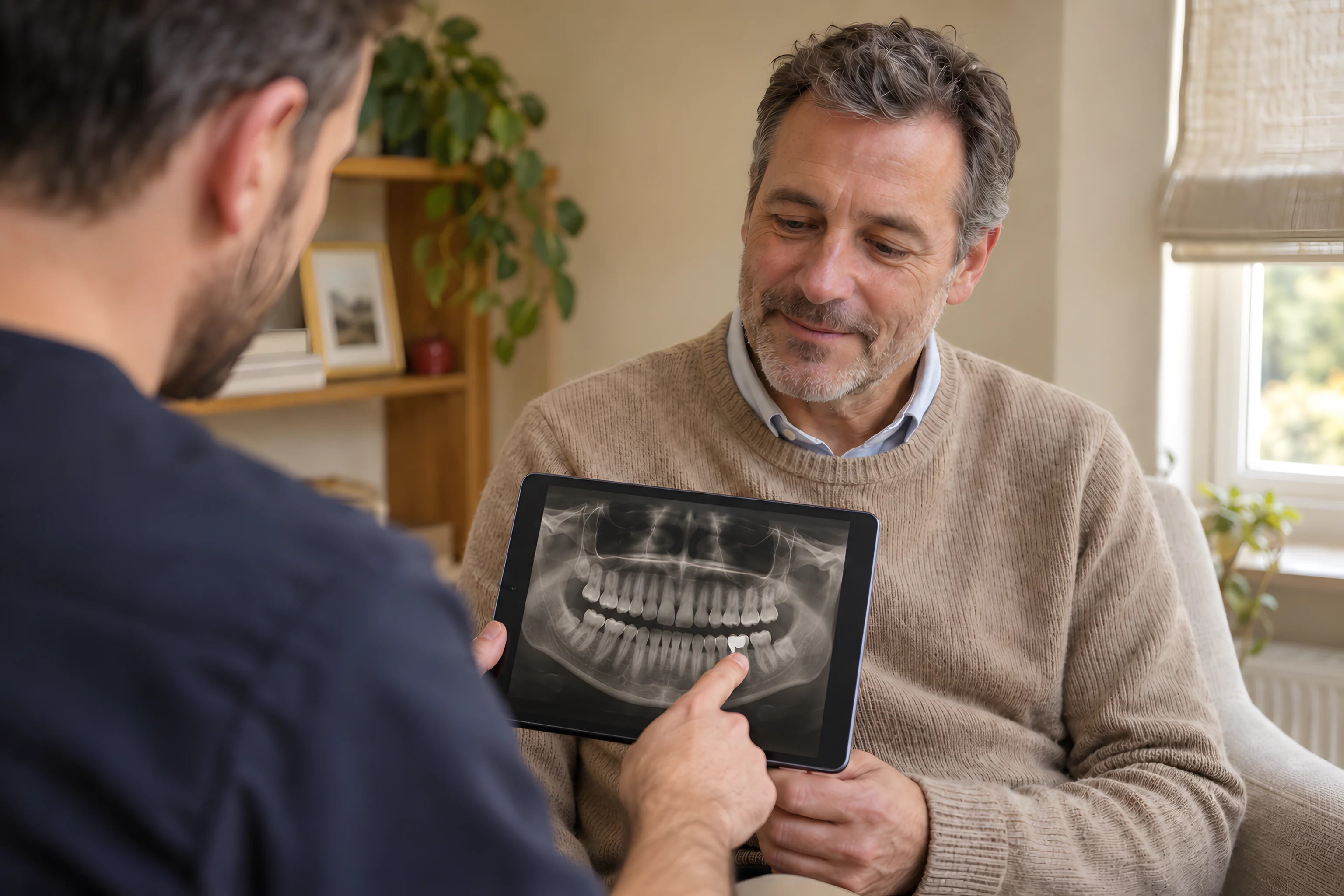
You might if you grind or clench your teeth. Your dentist looks for signs of wear and talks through whether a guard would help.
Your partner hears grinding at night
Your teeth look worn, flat or chipped
Your teeth feel sensitive to hot or cold
Your jaw, face or ears ache, especially in the morning
You get headaches or pain in your neck and shoulders
How we help with grinding.
Check
Your dentist looks for wear, cracks and strain on the jaw joints.
Choose a guard
We talk through a soft guard or a Michigan splint and explain the fee.
Make and fit
The guard is made to fit your teeth, then fitted and checked.
Review
We check how it feels and how your teeth are doing at your regular check-ups.
What can happen if I keep grinding?
Grinding can wear down your teeth until the wear reaches the nerve, causing sensitivity and pain.
Sensitivity to temperature, and pain
Cracks in the teeth
Receding gums
In time, lost teeth
Migraine headaches
Pain in the shoulders, neck, back and ears
Worn or cracked teeth may later need a crown or other repair. A night guard is much simpler and costs less.
Read more. The NHS explains teeth grinding and what can help.
Which type of night guard is right for me?
We offer a soft night guard and a Michigan splint, and your dentist helps you choose.
An occlusal splint, which is a hard guard that fits over your teeth, may be the only workable treatment for people who grind a lot. Several splints and mouth guards are available, including soft bite-raising guards. Your dentist explains which one suits your mouth and why.
Soft night guard
Michigan splint
Fee at Hillcross
£250
£350
Choosing
Your dentist advises which suits you
How much does a night guard cost?
A soft night guard at Hillcross costs £250 and a Michigan splint costs £350.
Night guard fees
Soft night guard
£250
Michigan splint
£350
Your dentist confirms the fee for your own treatment, in writing, before anything starts. You always get a treatment plan and quote to take home, and you are welcome to take your time before you book.
BDS, Barts and The London, 2007. Dr Baurhoo is the principal dentist. His interests include minimally invasive cosmetic work, composite and ceramic restorations, root canal treatment and looking after nervous patients.
Teeth grinding and clenching is called bruxism, and it means forcefully grinding or clamping your teeth together.
Most people are unaware that they grind, because they do it asleep. Sometimes a partner has to wear earplugs because of the noise. If your dentist says you should wear a night guard, don't be surprised. It is common.
Bruxism is a significant cause of tooth problems. Some people notice signs of wear, but it is more than a cosmetic problem. It also puts strain on the jaw joints.
Is a night guard worth having?
If you grind, a guard protects your teeth from further wear, which can save you from more costly treatment later.
A guard does not stop the habit, but it takes the force. Your dentist checks it at your regular visit and keeps an eye on your teeth. A guard is cheaper than a crown on each damaged tooth.